Thursday, March 12, 2015

Rehearsals: Performance in Disguise!

I have fond memories from Junior High of early, and I do mean early (6:30am), rehearsals the week leading up to the Concert Band Contest.  These were additional rehearsals outside of the already allotted band rehearsals scheduled during 5th and/or 6th period.  We were expected to get there on time, fifteen minutes early, so that we could warm up and be ready for the down beat.  Remember, "If you are early, you are on time; if you are on time, you are late; if you are late, you are early for tomorrow".

What did we do at these rehearsals?  We didn't play more than two notes, maybe.  We rehearsed standing as a ensemble, sitting as an ensemble, uniform (by section) instrument placement depending on where the conductor was or what his arms were doing, bowing as an ensemble, and "NO[T] GAWKING"  at the audience.  Basically, we rehearsed the performance minus the playing.

Why do I bring this up?  Well, in every ensemble I have been in, ever, I wished and continue to wish that such etiquette was practiced on a rehearsal to rehearsal to performance basis.  I find the older I get, the less the ensembles I play in are lectured about such things.  Posture goes by the wayside and performances seem less prepared.

The following are my two cents on rehearsal to performance etiquette.  Much of this is from my Jr. High Band director, but it is an important part of performing.  Music is a form of entertainment and therefore theatrical in many ways.

Posture:  I was told, very early on, to sit near the edge of my seat so that my feet could comfortably rest flat on the floor, providing the rest of me a solid foundation.  Sitting near the edge of the seat made it infinitely more difficult to slouch against the back of the chair.  I had to sit up straight; this is good for breathing, so not much to complain about there.  Sitting that far forward also made it difficult to rest my right elbow on the top of the chair - this is primarily a flute problem.  Lazy players will put their elbow on the back of the chair to help support their arm, because, you know, the flute is a super heavy instrument.  All you other instrumentalists can laugh, but every section has its bad habits.  One more thought: when you are playing your flute, the flute should be, roughly, parallel to the ground.  No odd angles, please, as it will mess with the rest of your posture and your ability to breathe.

Stand Placement:  Your stand should be set up so that it is high enough for you to read music easily, but low enough that 1) your sound isn't blocked, 2) you can see the person across from you (in my case it is always a clarinet player. Unless I am in orchestra and then it is the back of the heads of the viola section), and 3) you can easily make eye contact with the conductor.  There is a happy medium stand height range in there.  And remember, your eyes can move up, down, left, and right.  Your head shouldn't move.

"Silence is our canvas":  This was said in the middle of a rehearsal while I was in college.  It made all of us laugh because of the timing and delivery of the line, but it is so very true.  Talking and unsolicited noise prior to the beginning of a piece ruins the atmosphere.  It also creates an unstable foundation for the first note of the piece.  And of course, it is a distraction that could cause someone to miss their entrance.  It would be unrealistic to have no talking during a rehearsal, but keep it to a minimum.  And as soon as the conductor raises his arms, you should be able to hear a pin drop.  Furthermore, being aware of the need for silence and observing it will make it easier to transition into the performance atmosphere.

Beginning and Ending the Piece:  Each piece begins and ends with silence and minimal movement, if any.  When the conductor's hands go up, you ought to immediately prepare to play.  Your flute goes up to playing position and you take a breath to prepare for the entrance.  At the end of the piece, after the last note, you maintain playing position until the conductor lowers his arms.  If the piece ends and you immediately drop your flute, the moment is ruined and the ambiance is gone.  Finally, before the piece begins, make sure that you are ready to play.  What I mean is that there is a process that many young musicians ignore.  The flute comes to playing position, you take a breath, you set your embouchure, and then you begin to play.  I have been guilty of the following and I see/hear it a lot as well: the breath, and then simultaneously set the embouchure and begin playing.  Has anyone ever gotten a clean articulation that way?

Uniform Instrument Placement:  This is perhaps a bit nit picky, but theater is theater.  When you are "at ease" and the piece has yet to begin, the flute can lay across your lap.  That's a natural and comfortable position.  Once the piece begins, if you are not playing, I like to see the flute standing on the right thigh.  It shows that you are alert and that you are part of the music that is happening.

Rests during the Performance: NO GAWKING!!! So you aren't playing because you have the piccolo part and there are at least forty measures of rest before you come in - whatever you do, do not stare mindlessly out, anywhere really but especially at the audience.  They are here to watch and listen to you.  Not the other way around.  Try to look at either your own music or the conductor (occassionaly - don't awkwardly stalk the conductor).  Look like you are still part of the music being heard even though you aren't necessarily contributing to the sound.  However, there are times when you acknowledge the audience, usually when they are welcoming someone on stage or clapping at the end of a piece. Those would be appropriate times to turn and face the audience and smile at them.  They should feel like you are excited to be playing for them and that there is nowhere else you would rather be.  Besides, that's true, right?

As tedious as it may seem, thinking about these tiny details during each rehearsal will help you in the performance because they will become second nature.  Break a leg in your upcoming performances!


Tuesday, March 10, 2015

Another Busy Week: Preparing for the Weekend


This Friday I have the honor of participating in the Four '15 Quartet Flute Fest which benefits the Voluntary Action Center's Youth Enrichment Fund.  I will be co-hosting an extended technique workshop with Katie Smyth and Justin Cook; considering the topic and the amazing flutists with whom I am working, I cannot imagine this workshop being anything less than just a bunch of fun!

In general, I am excited to have the opportunity to participate in this event because, quite simply, I think the whole idea is outstanding!  What an opportunity for anyone involved including, but not limited to, the four young flutists throwing the shindig, the local flutists who will perform or teach workshops, and all in attendance.  If you are able to take part in the evening's various activities, you really, really should.


On Sunday the Columbia Community Band has its "Winds of March" Concert.  There will be another featured soloist and I get to revisit a piece that I haven't played since high school!  It is one of those pieces that you play and you later wonder if you will ever have the liberty to do so again.  Here is a hint as to what the piece is:  it opens with a delicious melody set in the lower register of the flute and then flows seamlessly into a presto section that could not exist without the percussion section.  Any guesses?  It's really something and if you have no idea to which standard band literature I refer, you definitely need to come to the concert!

I hope I will see you at least once this weekend!

Friday, March 6, 2015

And Until We Meet Again


I know that this post has nothing to do with playing flute, but last week a community with which I deeply identify lost an inspiring and loving figure.  Father Theodore Hesburgh, former president of the University of Notre Dame, was an educator and man who demanded the absolute best from his students.  There are many who are grateful to have known him, to have known of him, and to be part of the loving family he fostered.  It was during his tenure as the university's president that women were first admitted and it goes without saying that I would never have been able to study at Notre Dame without his belief in a good, well-rounded education for everyone.  My roommate said it best, but I will paraphrase: I am so fortunate and honored to have been, in my own very small way, part of Fr. Hesburgh's life.  I only met him once and he very politely asked what I was doing in the back of an NDSP SUV (for the record, someone stole my bike and I cannot remember why I was in the NDSP SUV).  I choose to celebrate your life, your love, and your influence Fr. Ted.  Thank you for everything.


Thursday, February 19, 2015

Sitting in the Flute Section

Last week's CCB rehearsal got me thinking about all of my ensemble experiences and in particular the way I felt sitting in the flute section of any given ensemble.  I feel as though I have spent most of my life just "sitting" in the section rather than actually being a member of the section.  What I mean is that I was there physically, but my mentality and preconceived notions on how I should behave kept me from fully integrating myself into the group.  Up until graduate school I was uptight and closed off from building relationships with my flute peers.  This sounds awful, and it somewhat is, but it is more normal than you might think.  I wasn't mean or rude, but I didn't always go out of my way to get to know anyone who wasn't immediately to my left or, more preferably, to my right.  

I may have missed out on relationships that I could still have now and relationships that could have made me an even better flutist.  It is not that I want to be best friends with every flute player, but I want to know them and I want them to know me.  I didn't talk much during rehearsal, which is not a bad thing.  In fact, if more people would stop talking during rehearsals groups could get more done.  Talking, unless it directly pertains to rehearsal, is for breaks and time outside rehearsal.   Okay, mini rant over.  Back to the topic at hand.  When I say I didn't talk much, I mean, not really at all.  I probably couldn't name most of the people I have played with over the years even if you showed me their picture.

At my first University Philharmonic rehearsal in grad school, I sat down and pulled out my flute, warmed up, and then sat there until Maestro began rehearsal.  Except that this other flute player, who will remain nameless (although anyone who has played with them probably knows who they are), sat down next to me and as they put their flute together they turned to me, introduced themselves, and started talking to me about, really, random things.  They were so chill and so comfortable being in rehearsal.  The funny thing is that I didn't realize how uncomfortable I was in rehearsals until I realized how comfortable they were.  And I became instantly jealous.  Why couldn't I be that chill and relaxed?  Was I so uptight that I was alienating my peers? (Yes, I was.) 

The more I played with this flutist, the more I began to relax and enjoy rehearsing with the people around me.  I started to know other flute players in my section.  They challenged me and pushed me because some of them had the nerve to be better than me in various aspects of flute playing.  And I realized that this was the best situation.  When I think back to high school band I remember how tense I always was in rehearsal because I rather disliked the other talented flute player in the band.  Yes, she made me work hard because I wanted to beat her in reseatings, desperately, but I missed out on improving in a far healthier manner.  We probably still wouldn't have been best friends because of her mentality, but I would have been happier.

So, finally, back to CCB rehearsal.  I can name everyone in the front row of the flute section.  I am not sure I can say the same for the back row.  And that makes me feel horrible.  Fortunately, some of us in the front row have been considering coming an hour early for rehearsal and playing quartets and flute choir music (depending on the number of people that show up).  This is exciting because I love playing music in any ensemble setting.  But I am also hoping to get to know the flutists I play with in band better.  Some of them have been in the band for a decade and this is only my second year.  I want to know them and I want them to know me. 

Besides, a flute section that plays together [outside of rehearsal], plays together [better].  :)

Tuesday, February 17, 2015

A Bit of Music History for You: The Oldest Instrument and the Oldest Song

So, I ran across this little gem on Facebook (I will admit that social media has its advantages)... here is the link to the full article.  I think this is fascinating!  The flute and drums are allegedly the first instruments, other than the voice, and here is a flute that verifies that flutes have been around for a very, very long time.  The Adam/Eve of instruments.  Yep, I said it.  All the other lesser instruments came from a humble baby cave bear bone flute beginning.  Enjoy this cool piece of history!


And here is a little bonus.  The earliest known, as I understand it, song.  At least the earliest recorded, via writing, song.  It is generally assumed that singing/music was an oral tradition prior to written notation.  The rhythm is an educated guess by the smart people who researched this, but look at the original notation! I am impressed they got anything out of it at all.  But then, that is why I probably wasn't asked to consult on this little project.  Maybe next time...


Sometimes I really think I should have been a music historian anthropologist.  That's a thing, I'm fairly certain.

For more flute history, read this blog post by my friend Katie Smyth.

Thursday, February 12, 2015

Educational Performances

Recently Pipes & Keys has been putting together ideas for things we could do at elementary school visits.  It is a bit tricky because we are trying to create programs and activities that will engage the young audience, involve music for two flutes, and exhibit good use of materials in the time allotted.  Playing for younger audiences can be especially challenging due to their general lack of attention span.  Unlike in a recital, when playing music for children the program needs to be more interactive, unless you want the children to stop listening after the first five minutes.

So I read excerpts pertaining to such events in "The Savvy Musician" and "Beyond Talent".  Both books gave the same general guidelines.  For instance, consider using musical excerpts or shorter arrangements of the music so that attention is more easily maintained and the excerpts can be repeated and more easily facilitated in the performance.  Only plan on a 30-45 minute presentation/performance, again for the attention span.  Try interweaving other school subjects into your musical presentation: writing (or English, as it were), Math, Art, etc.  Stick to one theme/concept for the whole presentation.  You don't want to overwhelm them and, despite the most well thought out lesson plan, too many details will be just too much.  I say this with experience as I taught Italian while working on my Masters degree.  Even college kids can only handle so much information in 45 minutes.

As I thought about things Pipes & Keys could do, I tried to treat the whole affair as a call and response activity, or as interactive an experience as I could make it given the musical pieces I was considering.  Here are a few of the ideas that I came up with:

A) We could play a piece, any piece, and ask the students to respond in some manner.  It could be something as "serious" or "dense" as Bach's Partita and we could have them write a story while we play, or it could be as "fun" and "light" as RK's Flight of the Bumblebee and we could ask them what makes it sound like a bee.  Is it the speed?  The buzzing sound created by flighty half steps in constant eighth note rhythm?  Is it the shape created by the melodic line?  Or does it not sound like a bee at all to them?  There is a chance that could be the case, especially if they have never heard it before and therefore don't associate the melody with a bee.

You could also take this time to give a brief, but fun, music history lesson on the composer of the piece you are playing and an introduction to the world they lived in when they composed the piece.  There are fun music history books out there geared towards younger audiences.  There are also theory books of the same mold.  And there are also just hilarious books like "Bach, Beethoven, and the Boys".  Seriously, just read the first page and if you aren't laughing then I am a bigger music nerd than I already thought.

B) We could play short excerpts of music from their favorite movies or play excerpts of Carnival of the Animals or Peter and the Wolf and introduce the idea of a musical motif.  If we play music from, oh I don't know, How to Train Your Dragon, do the students associate a particular melody with a particular character, place, or event?  After going through all the characters in Peter and the Wolf musically, can we tell the story, or even have them make up a story with those characters?  Finally, at the end of the day, do the students understand what a motif is?

C) Using theory, we could make work sheets with rhythms written out, a string of varying lengths of notes and have them tell us the total beats.  For example, they will see an eighth note, a quarter note, and a doted quarter note and they will add that up to equal three.  This is basic math in a musical context.  You can work on addition, fractions, greater/less than/equal to all while using musical notation.  You can also write out rhythms, give them a time signature and have them insert bar lines.  The possibilities are endless here.  You can have them clap rhythms and play them yourself.

D) In relation to the above mentioned idea, we could delve into simple composition as well.  You would have to teach them the range of your instrument -- not a bad idea -- and if you're feeling up to it and you play multiple instruments, you can emphasize the fact that not all instruments have the same range.  At any rate, the composition can come into play by you giving them pre-written rhythms that they can copy and to which they can merely add pitches.  If you want to be extra crafty, give them famous rhythms they might not recognize without the proper pitches, Beethoven's 5th for example.  The kids will have fun hearing what they composed played out loud and it might inspire them to go home and compose some more.  Think about it, you may inspire a future composer in 30 minutes of playing!

It seems like the possibilities are endless.  Plus, it will be fun  and we can leave them some fun music related puzzles or activities for them to take home.  I loved doing music math, and using note names to finish stories when I was younger (see example below).  Actually, I still do.  That shouldn't come as a shock considering I got my degrees in music.  Why would I take music theory and history classes unless I enjoy it?  And now that I have a plethora of music stickers I feel more than ready to go out into the young educational community and participate in the simple joys of music making!

Do you have more ideas on how to engage a young audience?  I would love to hear them as well as hear about your experiences in the elementary classroom!  Teach on, my friends. :)


Wednesday, January 28, 2015

Engaging Young Students

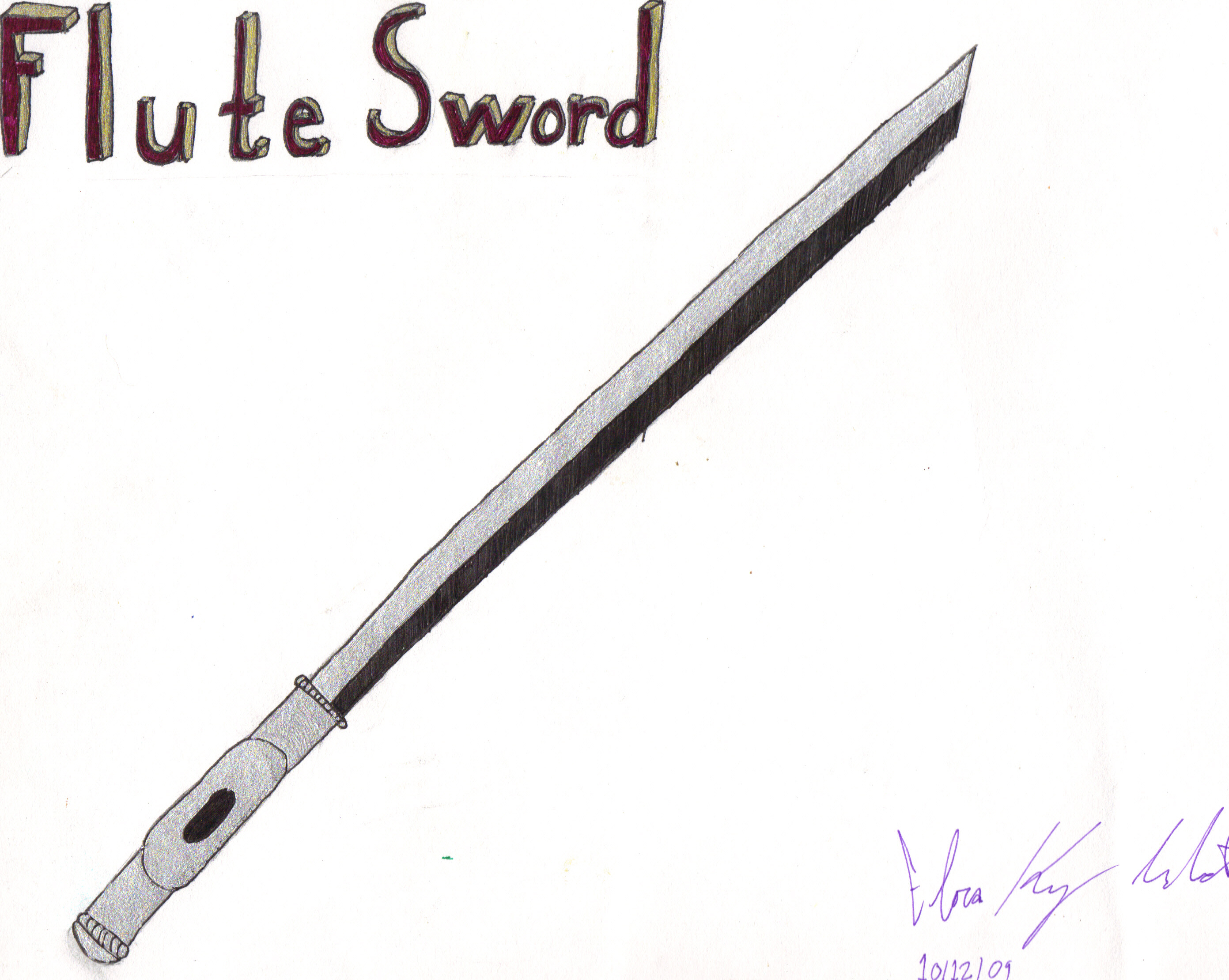
Yes, I googled "flute sword".
Teaching younger students is a double-edged sword: on one edge, they are a, moderately or completely, blank slate for you to work with; on the other edge, you have the responsibility to teach them everything, starting from the very beginning [a very good place to start].  It can be intimidating because any bad habits they develop are partially, if not entirely, your fault.  Well, perhaps they are only your fault if you fail to notice them or opt not to address the issue.

If you are lucky, as I have been, you will be graced with students who are very enthusiastic about learning the flute.  Whether they are perfectionists or extremely competitive, my students are not taking lessons because their parents want them to; they are there because they want to be there.  Great!  But you can't forget that they are still young.  Their minds may wander and they may not understand what you are saying and, worse, may not tell you that they aren't with you one hundred percent.

So, how do you wrangle these young minds?  How do you keep them on track?  Here are my ideas:

1) Especially in the very early lessons, when they are just trying to figure out how to make a sound or building up strength in their arms to hold the flute properly, take breaks.  They are taking on a lot, whether they know it or not and whether you remember it or not.  Think about it.  You are telling them quite a bit of information just to get the embouchure correct.  And they have no idea what embouchure even means!  Overwhelmed minds tend to wander.  Give them breaks and during these breaks talk to them about anything.  In the first lesson I tend to ask them questions about themselves and their interests outside of music.  I want to get to know them and build a relationship with them.  Show interest in them, and it seems more likely that they will maintain interest in what you are saying when you teach.

seems harsh...
2.  Once they know enough notes, whatever that may mean, try giving them fun music to play.  Yes, method books try to put in "fun" tunes, but sometimes what the method book writers think is fun is outdated to the 5-10 year olds you are teaching.  Pull out some Disney, Harry Potter, Star Wars, or what-have-you.  Pop culture music reminds the young student that the more they learn, the more "fun" music they will get to play.  Knowledge is power, right?

3. Similarly, take cues from your student.  Around Christmas time, one of my young students brought her church's Christmas music booklet into her lesson.  For the first five minutes she talked to me about how she likes "these songs"  and how she "could maybe learn how to play them".  Not only did I have her play one or two songs from that booklet each lesson in December, I wrote out traditional carols in keys and registers she already knew and in which she felt comfortable playing.  Enthusiasm is the greatest tool in learning anything.  Take note of and latch onto your students' musical interests outside of lessons.  These interests get them to practice more.  That's a good thing. So is their excitement.
4. If your student is having trouble mastering a certain aspect or technique in flute playing and if they are either ignoring the problem, despite you commenting on it every week, or they are beginning to get frustrated, turn the problem into a game or a challenge.  Today, I sat down and ordered some fun music stickers and made a sticker chart on Word.  It isn't anything fancy, although I enjoyed making it immensely (the crazy things you can do on Word these days), but the basic layout will appeal to young students because the idea is obvious: "on this date, your challenge is..., here is where I will put the sticker when you do it".  And who doesn't like stickers?  And not just any stickers, music stickers?  I had a blast picking them out on Amazon and I can't wait for them to get here so I can start rewarding students appropriately!  If your students act like they are too old for stickers, broker some deal where if they earn 5 stickers, then in the last five minutes of their next lesson they get to choose what they are going to play or work on.  Or maybe they want to try playing piccolo, alto flute, or whatever flutes you've collected from your travels.  The point is to keep them engaged, right?  Everybody wins with sticker charts.

5.  Finally, never underestimate the power of music in live performance.  If you give a recital and your students hear you play, it might inspire them to work harder because they want to play a piece you play at the performance or if they are really young they might just want to sound like you do (never mind the fact that you've been playing longer than they've been alive :) ).  On the flip side, forcing students to set goals also keeps them engaged; host a studio recital in which your students play solos or duets, and maybe you play a piece too.  Giving your students the opportunity to play is good for them for the above mentioned reason, but they will also think it is fun and their parents will love getting to hear them play.  I think it might be about time for the Crecelius Flute Studio to give a recital.  Yes, indeed.

As I am always eager to learn, who else has some ideas about how to engage younger students?  Please feel free to share!